
Think of personas as characters in a user experience story. They play the role of the hypothetical user, customer, consumer, or any party that experiences an end product. Just as how a storyteller researches about and develops characters based on their findings, a UX designer does the same for a persona through user research, testing, and analysis.
User Personas – Defined
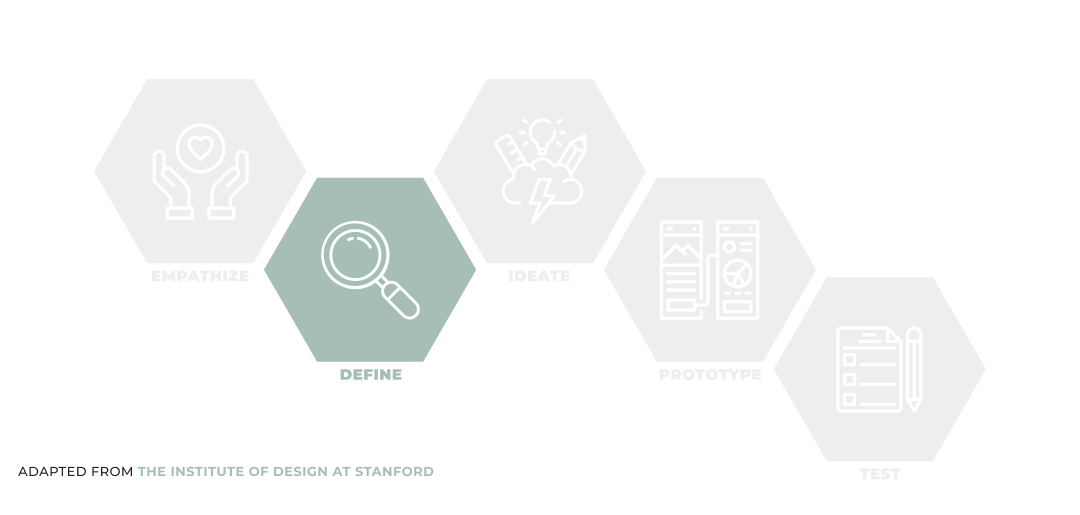
Creating personas is part of the second phase of the design process – Define. During the Define phase, a UX designer takes all their findings from the previous Empathize phase and goes ahead with structuring a general sense of the user, their pain points, motivations, goals, etc. The user persona essentially represents all of that generalization. Shlomo Gatz defines a user persona in his Smashing Magazine article, A Closer Look At Personas: What They Are And How They Work, as a synthesis derived from observations of many different people. Each persona represents a significant portion of actual real world people, and allows the designer to focus on a manageable and memorable cast of characters. According to Usability.gov, an effective persona should:
- Represent a major user group for a particular product
- Express and focus on the most prominent needs and expectations of the major user groups
- Give a clear picture of the users’ expectations and how they would use the product
- Aid in uncovering universally functional features
- Describe real people with backgrounds, goals, and values
Kevin O’Connor of UX Magazine emphasizes in his article, Personas: The Foundation of a Great User Experience that a persona isn’t just about demographics or user profiles. It’s a deep dive into the whys and whats of user psychology such as why users do the things they do and what they expect from a product. This knowledge makes it easier to creative innovative solutions that address user pain points and needs.
The Assignment
Two weeks ago, I had the opportunity to analyze two games that I’ve been playing over the past few months – Genshin Impact and Honkai: Star Rail, and how they resonated with me emotionally as a player. This week, I took that analysis further by creating two comprehensive personas pertinent to the general gaming sphere. For myself, I created a persona of The Casual Gamer. For the other, I created The Streamer. Since I’m interested in streaming my own gameplay in the near future (and perhaps other content such as illustration and design), I thought this would be an interesting exploration of how these two personas differ, and what I could learn from each.
Persona: The Casual Gamer
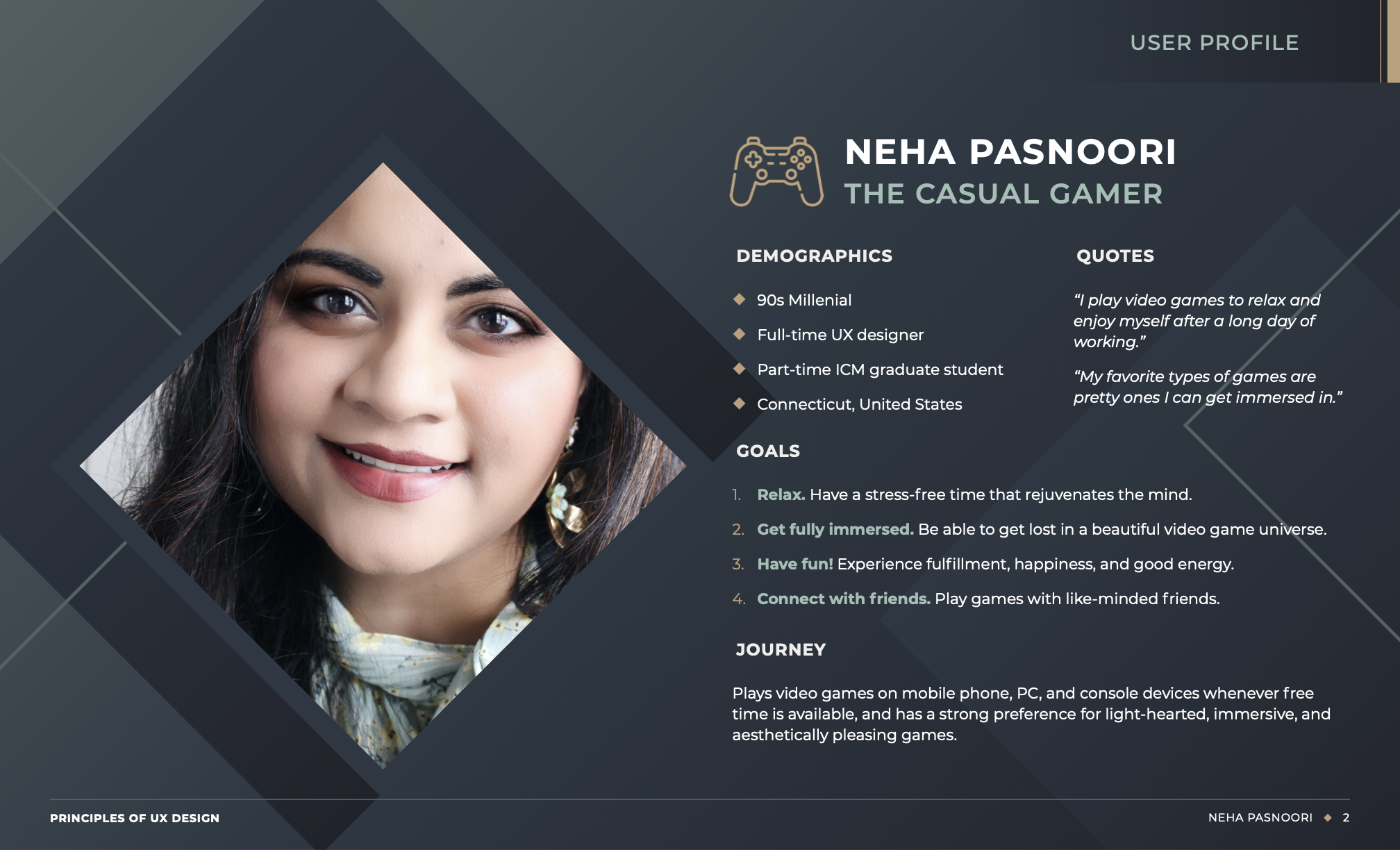
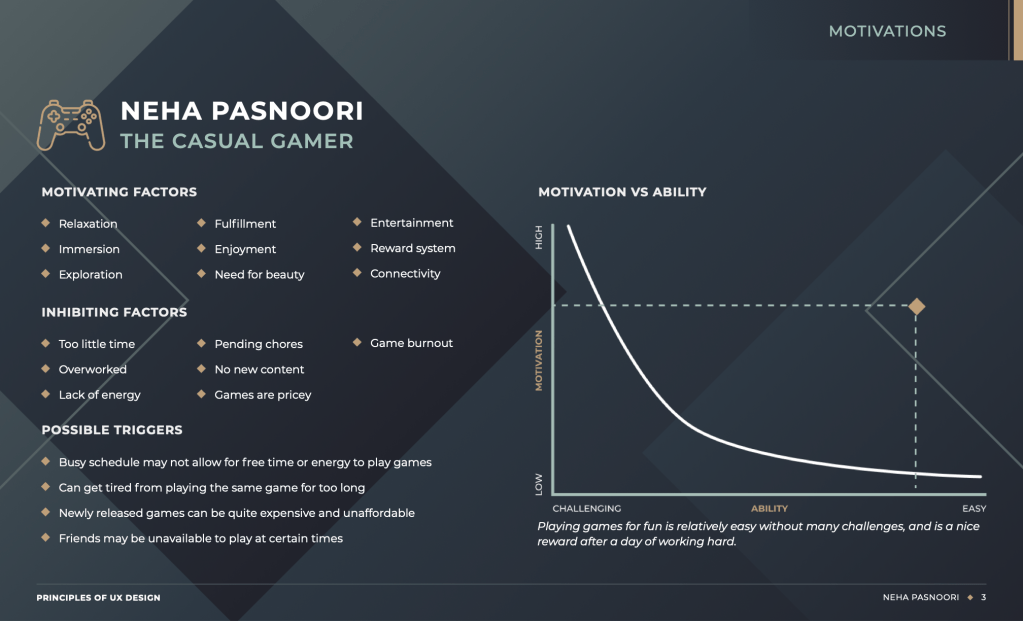
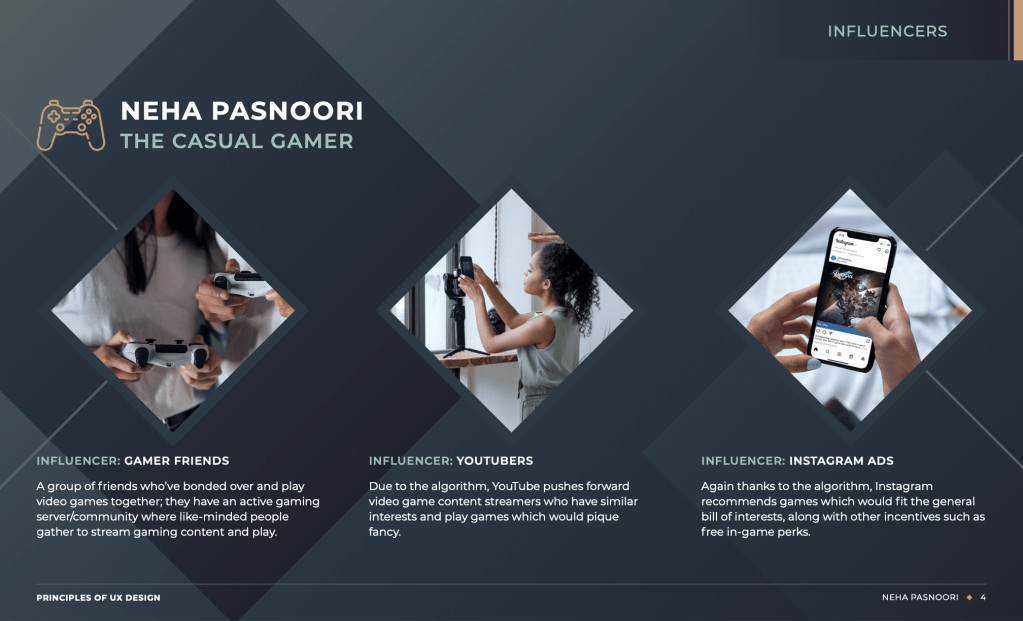
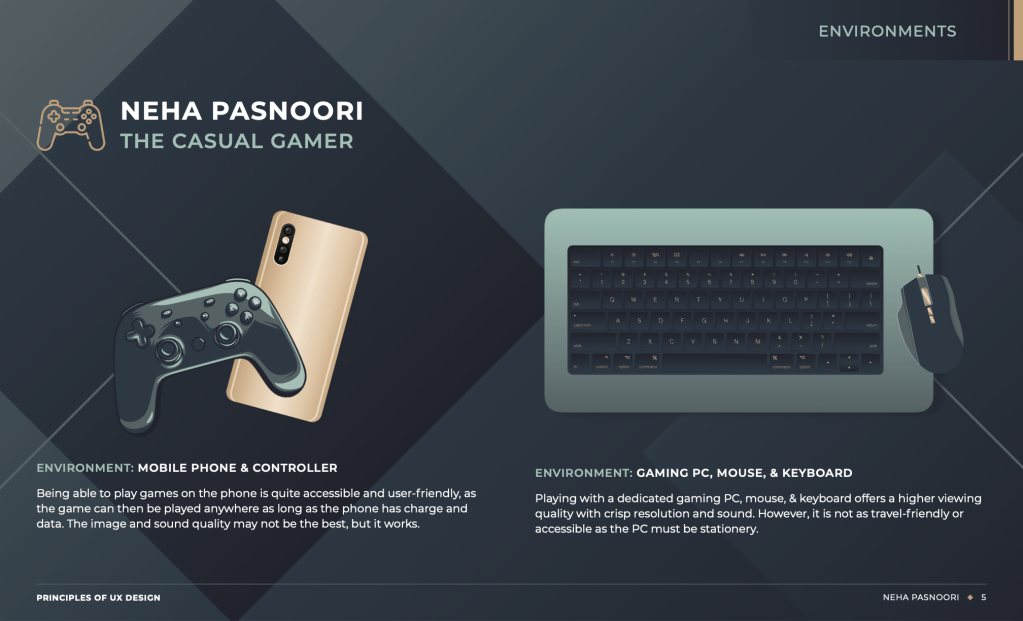
Creating The Casual Gamer persona was an exercise in self-assessment. I sat and figured out why exactly I played games, what motivates me as a gamer, and what pain points I experience when I play games for fun. I discovered some things about myself that I never realized, such as my proclivity to burn out from excessively playing the same game, and a need for variety. I realized that I may need to extend my gaming horizons and try other genres! For my pain points regarding lack of time time, I found that this could be resolved by planning my time out better and allowing myself more breaks (as I tend to work more than play).
Persona: The Streamer
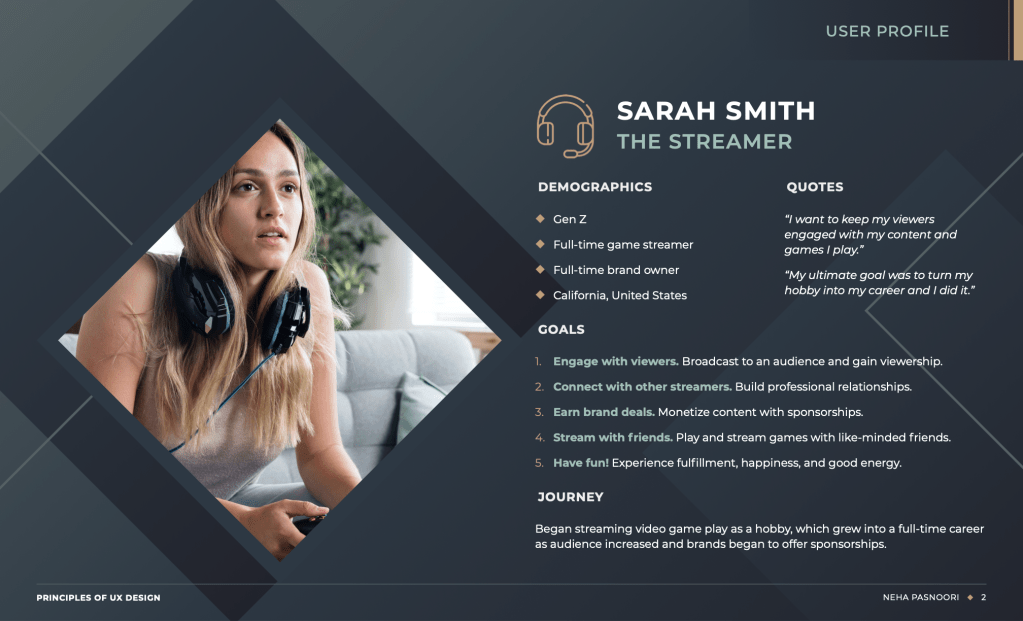
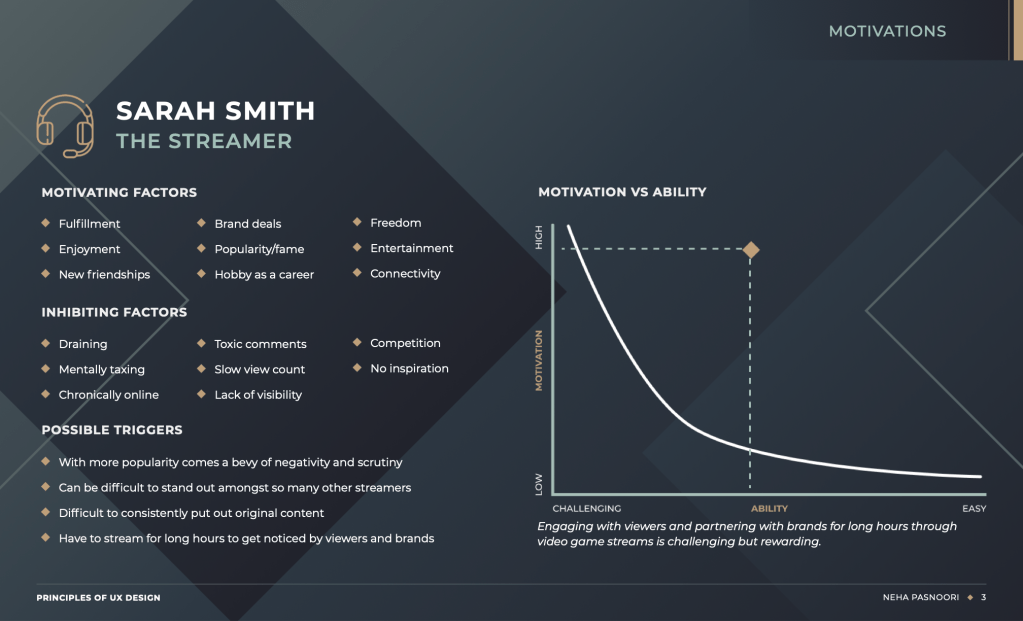
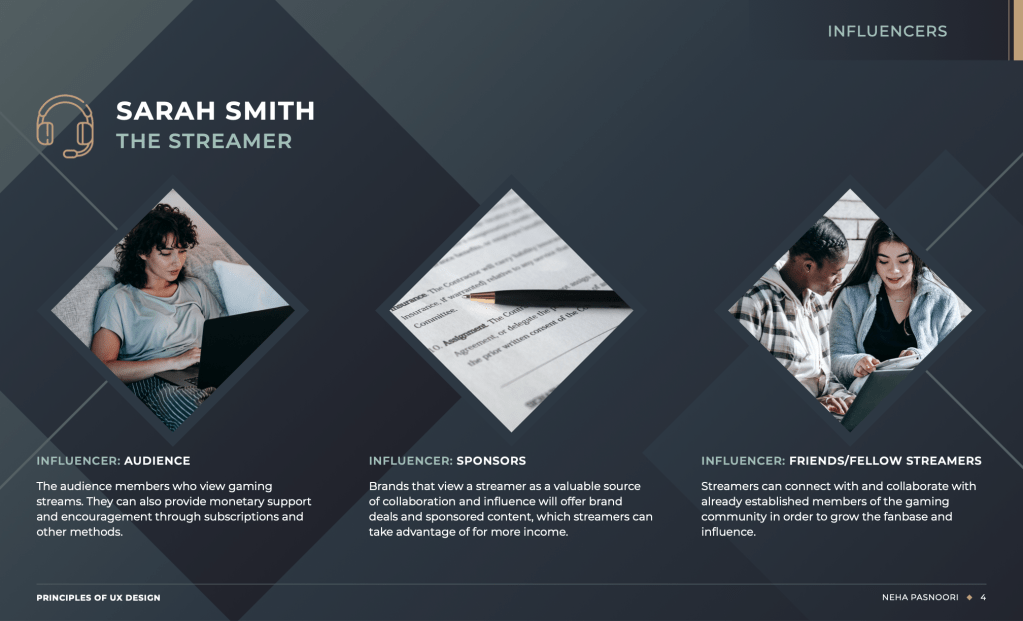
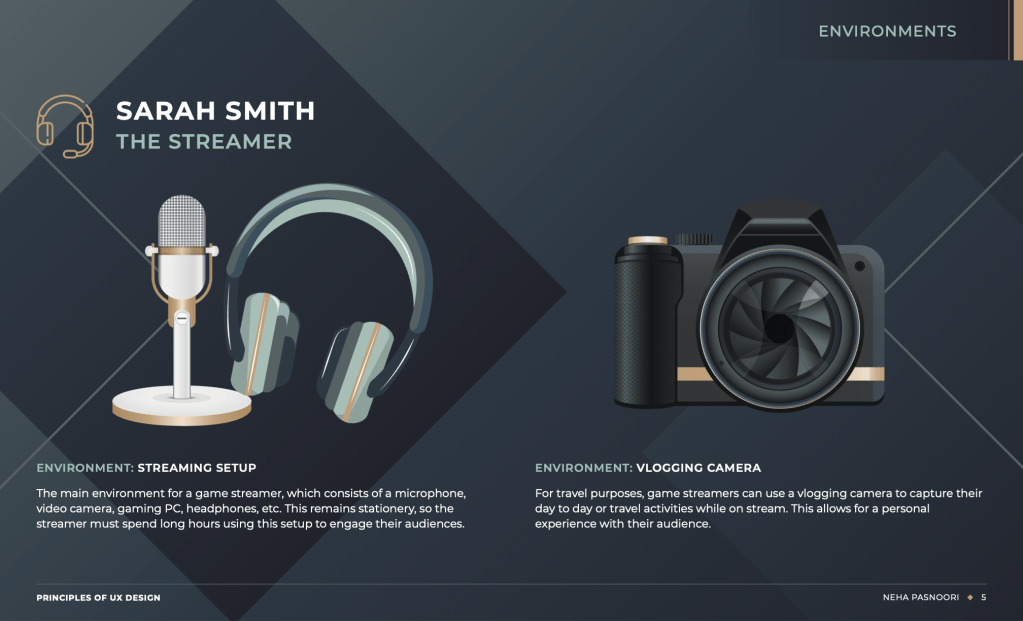
For the second comprehensive person – The Streamer – I had to put myself in the shoes of all the video game streamers I’ve watched over the years, and issues they’ve faced regarding their streaming careers. Many high-profile streamers with millions of subscribers share similar pain points such as cyberbullying, toxicity, and long hours spent staring at a screen. I summarized all of those findings into this singular persona. With further research, such as interviews with real streamers, I believe that I’d get even more insight in streamer lifestyle. I think that the shift from viewing games as simply a hobby into making them a real career requires a lot of personal adjustments, but can also afford for more freedom and independence.
Conclusion
To conclude, making these two comprehensive personas proved to be fruitful. I’ve had this dream of becoming a streamer for a while now, and I even starting creating streaming assets and other such content. This exercise allowed me to explore the motivations, goals, and pain points of two very different user types, as well as understand both a bit better.
 Neha Pasnoori | Blog
Leave a comment